Oil Tank Leaks, Contamination, and Remediation in NJ
A leak is not an upgrade to the removal job; it is a different job with a different regulator, a different pricing model, and a different timeline. This guide covers how leaks get found, what happens once contamination is confirmed, what the cost tiers actually are, and what the work physically involves. For the baseline numbers on a clean removal, start with the NJ cost guide.
How leaks are found
Five discovery paths account for nearly every residential contamination case in New Jersey:
- Dirty soil at removal. The most common path. The contractor pulls the tank, sees stained soil or smells oil in the pit, and the closure stops there. Excavation pauses, samples go to the lab, and the job converts to an assessment.
- Tank sweep plus sampling before a sale. A buyer's sweep locates the tank; soil borings around it come back with petroleum hydrocarbons above the standard. The leak is now a documented fact in a real estate transaction.
- A failed tank test. Tightness or pressure testing of an in-service tank indicates the shell no longer holds. The test proves the tank failed; sampling then establishes whether — and how far — oil escaped.
- Sheen or odor. An oil sheen in a sump pit, a persistent fuel smell in the basement, or oily water surfacing in a low spot of the yard. These are late-stage signs; oil that reaches a sump has already traveled.
- The buyer's inspector. A home inspector flags a vent pipe, a capped line, or an old fill cap, which triggers the sweep and sampling sequence above. If you are heading toward a listing, read the selling guide before the buyer's inspector reads your yard.
If any of these has already happened at your property, the sequencing matters more than speed — see the suspected-leak situation page for what to do first and what not to sign.
What happens when contamination is confirmed
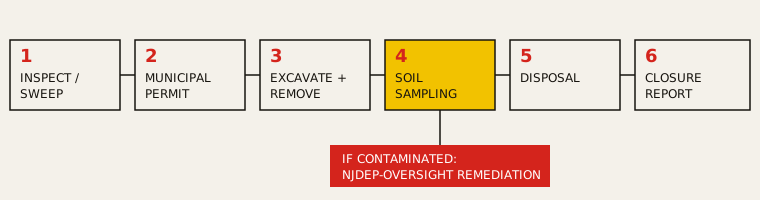
Confirmed contamination from a heating oil tank falls under NJDEP oversight. The discharge gets reported to the state, and the cleanup proceeds under NJDEP's Site Remediation Program — the framework that sets soil standards, documentation requirements, and closure criteria.
In practice, a regulated residential cleanup is directed by an LSRP — a Licensed Site Remediation Professional. In plain terms: a state-licensed environmental professional who designs the investigation, decides how much soil has to come out, certifies the lab data, and signs the document that says the site meets the standard. The LSRP works the case; NJDEP audits the outcome. The homeowner's job is mostly to hire competent people and keep every piece of paper.
This is the point where the project stops being a one-day excavation and becomes a documented environmental case with a file number. That file follows the property — which is exactly why the paperwork, done right, is what restores the property's marketability.
Ignoring a suspected leak does not preserve the status quo. Oil plumes migrate through soil and toward groundwater, remediation costs compound with distance traveled, and a buyer's tank sweep will find the tank anyway — at the worst possible moment in a transaction. Run the leak-risk calculator and get sampling done on your own schedule, not a buyer's.
What remediation costs, and why the range is wide
| Tier | Typical range | What it usually means |
|---|---|---|
| Minor, caught early | $3,000 – $8,000 | Small release confined near the tank pit; limited over-excavation and disposal. |
| Typical residential case | $8,000 – $10,000 | Where most confirmed leaks land: a defined soil plume, no groundwater impact, standard excavation and confirmatory sampling. |
| Extensive soil impact | $10,000 – $15,000 | Larger or deeper plume, harder access, more truckloads of soil out and clean fill in. |
| Severe, groundwater impacted | $100,000+ | Oil reached groundwater or migrated under structures or toward wells; monitoring wells and long-tail oversight. |
Five variables drive where a case lands in that table:
- Volume released. A pinhole that wept for two years and a split seam that dumped half a tank are different projects.
- Soil type. Sandy soil lets oil travel fast and far; dense clay tends to hold a plume tight but makes excavation slower.
- Depth to groundwater. The single biggest cliff in the cost curve. Oil that stays in unsaturated soil is an excavation problem; oil that reaches the water table is a monitoring-and-years problem.
- Proximity to wells and structures. A plume near a potable well or under a foundation constrains how you dig and raises the standard of proof for closure.
- How long it leaked. Time converts small releases into large plumes. This is the variable the homeowner actually controls.
Nobody can price remediation before sampling. The lab data defines the plume; the plume defines the scope; the scope defines the number. A contractor who quotes a firm remediation figure before any samples exist is either guessing or planning to renegotiate — treat it as a red flag either way.
What remediation physically involves
For the typical residential case, the work is unglamorous earthmoving with lab checkpoints:
- Excavate the contaminated soil. The tank comes out (if it hasn't already) and impacted soil is dug from the pit outward until field screening suggests the edges of the plume.
- Dispose of it, documented. Contaminated soil is trucked to a licensed facility with weight tickets and manifests. Those receipts belong in your permanent file.
- Confirmatory samples. Post-excavation samples from the pit walls and floor go to a lab to prove the remaining soil meets the standard. Lab turnaround is typically about 3–10 business days.
- Groundwater monitoring, sometimes. If oil reached or threatened groundwater, monitoring wells and repeat sampling rounds get added — this is what stretches severe cases across years instead of weeks.
Insurance and the UST Fund, briefly
Homeowner's insurance rarely covers heating oil contamination cleanup, and the state UST Fund — while real and applicable to leaking residential tanks — currently date-stamps new applications without reviewing them until funding is available, with a backlog NJDEP's own pages put at one year on its UST Fund page and 3.5 years in its unregulated heating-oil FAQ. The mechanics, the income tests, and NJDEP's warning about "free, state-funded" pitches are covered in the grants, reimbursement, and insurance guide.
Next step
If you have a suspicion but no data, get the data: a leak-probability read costs nothing, and soil sampling costs $300–$1,000 — the cheapest fact in this entire process. If you have confirmed contamination, the priority is matching with a contractor who works under NJDEP oversight routinely, not occasionally.