Massachusetts: the state where the fire code sets a deadline
Massachusetts is unusual among the five states on this site: the pressure to deal with an old tank doesn't come only from buyers and insurers. The state fire code (527 CMR) requires an underground tank that has been permanently disconnected or out of use for 24 months to be removed. Most states leave abandoned tanks in legal limbo; Massachusetts wrote them a deadline. Enforcement runs through your local fire department, which is also where the removal permit comes from — so the same office that issues your paperwork is the one the code answers to.
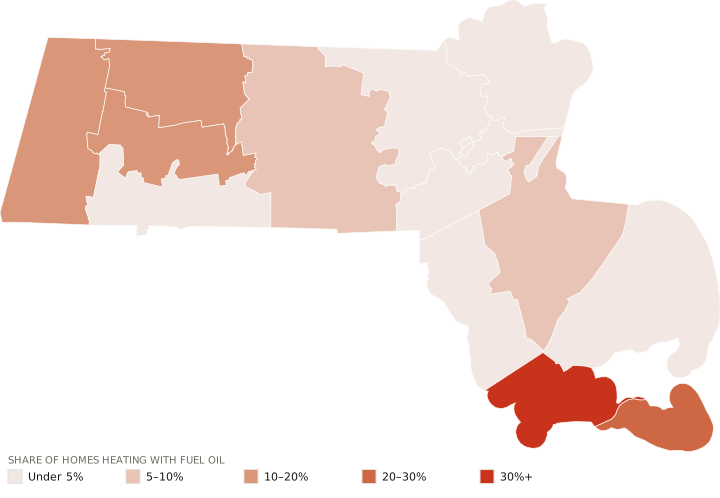
Census ACS 2020–2024, table B25040.
What it costs in Massachusetts
| Line item | Typical range |
|---|---|
| Underground removal, clean soil | $1,800–$4,200 |
| Difficult access | up to ~$5,000 |
| Closure in place | $1,000–$2,500 |
| Tank sweep | $150–$500 |
| Soil sampling and lab analysis | $300–$1,000 |
| Remediation if a leak is confirmed | $3,000–$15,000; most residential $8,000–$10,000; severe $100,000+ |
Massachusetts sits second only to downstate New York on price, and the drivers are structural: Boston-metro labor and equipment rates, disposal facilities that charge New England prices, and a permitting culture where the fire department inspection is a genuine gate, not a formality. Island and Cape jobs add ferry logistics and thin contractor coverage — a Vineyard removal can cost mainland price plus the boat. Western Massachusetts quotes run closer to the bottom of the range, with the usual rural caveat about mobilization fees.
Who regulates what
Three layers, cleanly separated. The local fire department permits and inspects the removal itself under the state fire code — treat it as your first phone call, since its rules (including the 24-month removal requirement for disconnected tanks) frame the whole job. The municipality may add building, health, or trench permits on top; towns vary, and your contractor should know the local stack. And MassDEP takes over the moment a release is found: Chapter 21E, the state's oil and hazardous materials law, makes the property owner responsible for reporting and cleaning up a release, and the fire code requires checking for evidence of a release when an underground tank comes out. Chapter 21E cleanups run through licensed site professionals and end in documentation a future buyer's attorney will want intact — the response actions, the closure opinion, all of it.
What Massachusetts does not have is a state fund that pays for residential heating oil tank removal. The financial angles that do exist — including the homeowner insurance coverage rules specific to Massachusetts heating oil releases — are laid out on the MA financial relief page.
Because the fire code frames disconnected underground tanks as items to be removed, filling a Massachusetts tank with sand and leaving it is a weaker option than in states where abandonment is legally neutral. Some fire departments will approve an in-place closure where extraction is genuinely impractical — a tank under a structure, for example — but expect to justify it, and expect a future buyer's attorney to ask why the tank is still there. If your lot allows extraction, the $500–$1,000 you save by closing in place usually resurfaces, with interest, at resale.
The transaction reality
The 24-month rule changes the shape of a Massachusetts sale. In other states, a buyer who finds an abandoned tank negotiates about risk; here, the buyer's attorney can point to a code section and call the tank a compliance defect. That makes "leave it for the next owner" a weak position — the next owner's lender and insurer will read the same code. Boston-area insurers ask about oil tanks at binding, and homes with undocumented buried tanks routinely get flagged during the insurance step that every financed purchase must clear.
There's also a seasonal reality: New England ground freezes matter less than New England closing calendars. Spring-market sellers who discover a tank in February are competing for excavation slots with everyone else who made the same discovery. A tank dealt with in the off-season — permit, removal, clean sample, fire department sign-off — costs the same $1,800–$4,200 and none of the schedule risk.
Where to go from here
- Find MA tank contractors — who's qualified, and how matching works here.
- MA financial relief — insurance coverage rules and the honest funding picture.
- Tank sweep — for the converted-to-gas house with no record of what happened to the tank.
- Underground tank removal — permit to excavation to release check, step by step.
- Cost estimator — your range, adjusted for access and region.
If the tank's fate is already decided, skip to the contractor contact form and get matched with licensed Massachusetts contractors who handle the fire department paperwork routinely.