New Jersey: the buried-tank state
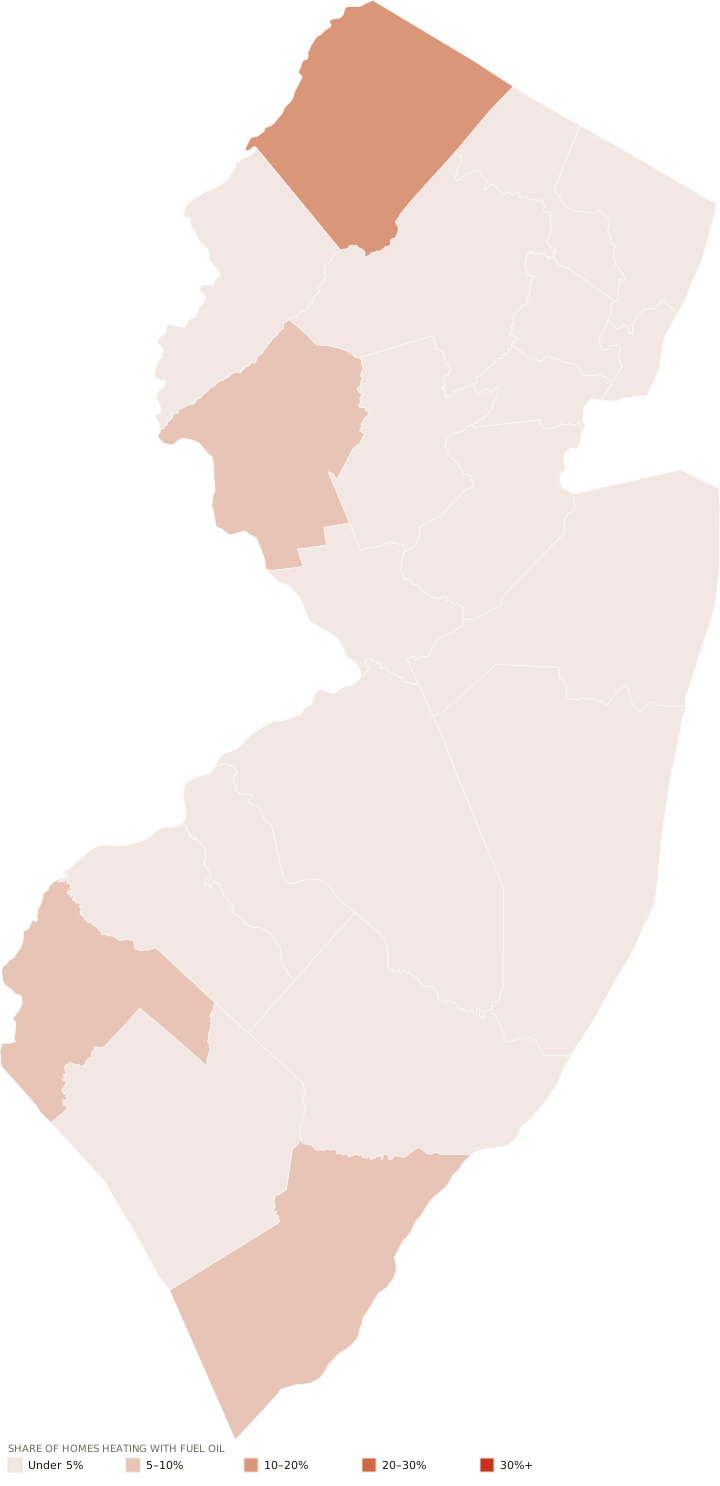
Only 2.4% of New Jersey households still heat with oil — the lowest share of any state we cover. That number is not reassurance. It is the residue of fifty years of natural gas conversions, and every one of those conversions had a tank attached to it. Some were pulled. Many were filled with sand, or simply abandoned, under lawns in Bergen, Essex, Union, and Morris counties. The active-heating count below measures the tanks still working. The tanks that matter at closing time are the ones it can't see.
Census ACS 2020–2024, table B25040.
What it costs in New Jersey
| Line item | Typical range |
|---|---|
| Underground removal, clean soil | $1,500–$3,500 |
| Difficult access (tight lots, additions, decks) | up to ~$5,000 |
| Closure in place (fill and abandon) | $1,000–$2,500 |
| Tank sweep (locate a suspected tank) | $150–$500 |
| Soil sampling and lab analysis | $300–$1,000 |
| Remediation if a leak is confirmed | $3,000–$15,000; most residential $8,000–$10,000; severe $100,000+ |
NJ pricing clusters at the low end of the region because the market is dense and competitive, and short haul distances to licensed disposal facilities keep trucking costs down. What pushes an NJ quote up is the lot, not the state — postwar houses in the northeastern counties often have tanks pinned under driveways, patios, or additions built after the tank went in, and the rocky Highlands soil in Sussex, Passaic, and Hunterdon slows excavation. Municipal permit fees ($50–$500) vary town by town, and NJ has 564 municipalities, so ask which town's fee is in your quote.
Who regulates what
The agency is the New Jersey Department of Environmental Protection (NJDEP), and the single most misunderstood fact in this market is where its authority starts. Residential heating oil tanks are unregulated USTs in New Jersey: NJDEP does not require you to remove, register, or test a non-leaking residential tank. The removal itself is governed by your municipality — a construction/fire permit, an inspector who looks at the open excavation, and a sign-off.
NJDEP enters the moment contamination is found. A confirmed discharge must be reported to the state hotline, gets a case number, and closes only with a No Further Action letter — the document every future buyer's attorney will ask for. On money: the state's UST Fund has a backlog for leaking-tank claims that NJDEP's own pages put at one year on its UST Fund page and 3.5 years in its unregulated heating-oil FAQ, and its Non-Leaking Tank Program — the grant that once paid for proactive removals — has been suspended since May 3, 2011. Anyone marketing "free tank removal, the state pays" in 2026 is describing a program that stopped taking applications fifteen years ago. Details and honest alternatives are on our NJ financial relief page.
The transaction reality
In New Jersey, the tank issue is decided by the real estate market, not the regulator. A buyer-side tank sweep is now a default line item in North and Central Jersey home inspections — attorneys recommend it in the same breath as termites. If the sweep finds steel under your lawn, the standard buyer demand is removal with clean soil results before closing, at your expense, on the buyer's timeline. Lenders and homeowner insurers reinforce this: many NJ carriers decline or surcharge policies on homes with known buried tanks, and underwriters read "tank closed in place, no soil data" as an open question, not an answer.
That is the actual argument for acting before you list. A removal you schedule costs $1,500–$3,500 and takes a few weeks including the permit. A removal a buyer demands mid-contract costs the same money plus leverage: you're negotiating remediation contingencies against a closing date. Sellers who pull the tank first sell the hole, the permit, and the lab report — a closed file instead of an open threat. The selling guide walks the sequencing.
NJ county pages
Costs, permit offices, and tank density vary meaningfully across the state. We keep county-level detail for the eight counties where buried tanks surface most often:
Bergen County
Highest transaction volume; sweeps near-universal in home inspections.
Essex County
Old housing stock; tanks under additions and driveways are common.
Morris County
Rocky soil, larger lots, later gas buildout.
Union County
Dense postwar suburbs, high conversion-era abandonment.
Passaic County
Split market: urban south, Highlands north.
Monmouth County
Shore-market resale pressure; high groundwater near the coast.
Middlesex County
High volume, competitive contractor pricing.
Somerset County
Estate lots where tanks sit far from the house.
Where to go from here
- Find NJ tank contractors — what a licensed NJ operator looks like and how we match you.
- NJ financial relief — the real status of the UST Fund and what still pays.
- Tank sweep — the $150–$500 scan that settles whether a tank exists.
- Underground tank removal — what the job includes, step by step.
- Cost estimator — a range for your specific lot in about a minute.
If you already know the tank has to go, the fastest path is the contractor contact form — your ZIP and a few tank details, matched to licensed NJ contractors.